
Last Updated on September 19, 2026

Okay, future engineers — let’s talk about HBCUs with engineering programs.
If you’re here, you’re on the hunt for Black Colleges with real, ABET-accredited engineering programs. Not a recycled list. Not a guess. The actual, current answer.
So we went straight to the source. Every school’s own engineering department, every accreditation page, verified fresh. And here’s the part that made us sit up: what used to be a list of 13 schools is now 21. HBCU engineering has been quietly building while nobody was keeping count.
Let’s fix that. Let’s get into it, Fam.
List of ABET-Accredited HBCU Engineering Schools
Your first move in building an amazing engineering career is choosing the right school. Here’s the complete, freshly verified list, organized so you can find your fit fast.
The Original 13: Verified and Updated
North Carolina A&T State University
Greensboro, NC. A&T produces more Black engineering graduates than any university in the country. Period. Nine ABET-accredited programs: Architectural, Bioengineering, Biological, Chemical, Civil, Computer, Electrical, Industrial and Systems, and Mechanical Engineering. You want options? This is the school with the most of them.

FAMU-FSU College of Engineering
Tallahassee, FL. Quick myth-bust, because this one’s overdue: this is not two programs stapled together. FAMU and Florida State share one single College of Engineering, the only shared engineering college in the entire nation. Seven ABET-accredited programs: Biomedical, Chemical, Civil, Computer, Electrical, Industrial, and Mechanical Engineering. Students also study Aerospace Engineering here, though it currently runs outside ABET’s engineering accreditation. And access to the National High Magnetic Field Laboratory? That’s not nothing.

Jackson State University
Jackson, MS. Three ABET-accredited programs: Civil, Computer, and Electrical Engineering, plus an ABET-accredited Computer Science degree. JSU also offers a Biomedical Engineering track worth asking about directly if that’s your lane.

Photo via Jackson State University
Howard University
Washington, D.C. Five ABET-accredited programs: Chemical, Civil, Computer, Electrical, and Mechanical Engineering. The College of Engineering and Architecture also runs a 5-year professional architecture pathway and just added a Fundamentals of AI certificate. Howard doesn’t sit still.

Tuskegee University
Tuskegee, AL. Five ABET-accredited programs: Aerospace Science, Chemical, Computer, Electrical, and Mechanical Engineering. Computer Engineering picked up its ABET accreditation in 2022, so if you last checked this school a few years back, look again. The Tuskegee Airmen legacy still runs deep here, and it shows.

Photo via Tuskegee University
Prairie View A&M University
Prairie View, TX. Five ABET-accredited programs: Chemical, Civil, Computer, Electrical, and Mechanical Engineering, backed by federally funded research centers in cybersecurity, smart microgrids, and more. Real research money, real research output.

Hampton University
Hampton, VA. Three ABET-accredited programs: Chemical, Computer, and Electrical Engineering. A new Mechanical Engineering degree with Robotics and Materials concentrations just launched and is working toward its own accreditation now. Hampton is also a national leader in aviation and architecture, though those run under separate accreditors, not ABET.

Photo via Hampton University
Morgan State University
Baltimore, MD. Five ABET-accredited programs: Civil, Electrical, and Industrial Engineering, plus Transportation Systems and Transportation Systems Engineering. Here’s the flex: Morgan is the only place in the country offering transportation degrees at the bachelor’s, master’s, and doctoral level in one department. Mechatronics and Sustainable Urban Environmental Engineering are next up for their first ABET review in 2027.

Southern University and A&M College
Baton Rouge, LA. Three ABET-accredited programs: Civil, Electrical, and Mechanical Engineering, housed in the College of Sciences and Engineering. The civil curriculum alone stretches from transportation to geotechnical to urban planning.

Photo via Southern University and A&M College
Alabama A&M University
Huntsville, AL. Three ABET-accredited programs: Civil, Electrical, and Mechanical Engineering. Worth knowing before you apply: AAMU’s computing degree is Computer Science, not Computer Engineering, and it’s backed by an actual partnership with Apple through the AAPLE New Silicon Initiative.

Norfolk State University
Norfolk, VA. Two ABET-accredited programs, and one of them is genuinely rare: Electrical and Electronics Engineering, and Optical Engineering. Optical Engineering is one of only about five ABET-accredited programs of its kind in the entire country, and the only one at an HBCU. Let that sink in.

Tennessee State University
Nashville, TN. Four ABET-accredited programs: Architectural, Civil, Electrical, and Mechanical Engineering. TSU’s Electrical Engineering program is in its fifth consecutive ABET accreditation cycle, dating back to 1992. That’s not luck. That’s a program that keeps delivering.

Photo via Tennessee State University
University of the District of Columbia
Washington, D.C. Now branded the School of Engineering and Applied Sciences, and this one needs a real correction from older coverage: UDC’s engineering program isn’t fading. It’s expanding. Four ABET-accredited programs, Biomedical, Civil, Electrical, and Mechanical Engineering, with Biomedical Engineering standing out as the first and only ABET-accredited HBCU program of its kind in the nation. UDC also offers Computer Engineering. Say that one a little louder for the people still repeating outdated news.

8 More HBCUs With ABET-Accredited Engineering Programs
Yeah, we said 8 more. Here’s where it gets good.
South Carolina State University
Orangeburg, SC. Three ABET-accredited programs: Civil Engineering (with a Fire Protection Engineering option), Industrial Engineering, and Nuclear Engineering. Read that last one again. The only HBCU nuclear engineering program in the country lives here.

Photo via South Carolina State University
Virginia State University
Petersburg, VA. Two ABET-accredited programs: Computer Engineering and Manufacturing Engineering, through the College of Engineering and Technology.

Photo via Virginia State University
University of Maryland Eastern Shore
Princess Anne, MD. An ABET-accredited BS in Engineering, built as a general engineering degree with aerospace, computer, electrical, and mechanical specialization tracks, accredited since 2011. Flexibility built right in.

Bethune-Cookman University
Daytona Beach, FL. An ABET-accredited BS in Computer Engineering, part of the College of Science, Engineering, and Mathematics, accredited since 2013.

Texas Southern University
Houston, TX. Two ABET-accredited programs: Civil Engineering and Electrical and Computer Engineering, both accredited since 2020 through the College of Science, Engineering and Technology. Newer, but no less real.

Photo via Texas Southern University
West Virginia State University
Institute, WV. An ABET-accredited BS in Civil Engineering, accredited in 2023, making WVSU the 18th HBCU nationally to earn ABET engineering accreditation. Welcome to the list.
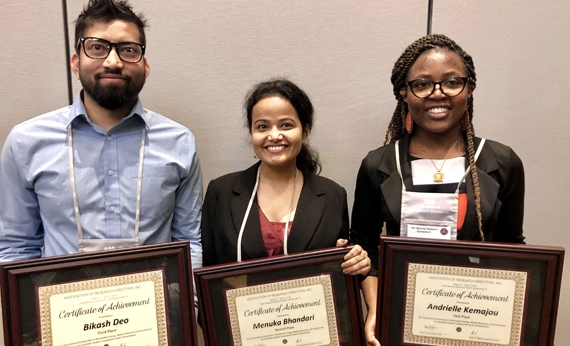
Photo via West Virginia State University
Central State University
Wilberforce, OH. Two ABET-accredited programs through the John Garland College of Engineering, Science, Technology, and Agriculture: Manufacturing Engineering, accredited all the way back in 1989, and Environmental Engineering, accredited since 2017. Old-school foundation, forward-looking growth.

Benedict College
Columbia, SC. Two ABET-accredited programs through the School of Science and Engineering: Environmental Engineering, the first of its kind at an HBCU in South Carolina, and a newly accredited Electrical Engineering program. Benedict is moving, and moving fast.

This list is your starting point, not your finish line. Aerospace, biomedical, nuclear, optical, or the classics like civil and mechanical: there’s an HBCU building engineers in that exact lane. Real programs. Real accreditation. Real options.
School Comparison at a Glance
Twenty-one schools is a lot to hold in your head at once. So here’s the quick-scan version. Use it to shortlist your top five before you go deep on any one program.
| School | Location | ABET-Accredited Engineering Degrees | Standout Specialization |
|---|---|---|---|
| North Carolina A&T State University | Greensboro, NC | Architectural, Bioengineering, Biological, Chemical, Civil, Computer, Electrical, Industrial and Systems, Mechanical | Most Black engineering graduates of any U.S. university |
| FAMU-FSU College of Engineering | Tallahassee, FL | Biomedical, Chemical, Civil, Computer, Electrical, Industrial, Mechanical | Only shared engineering college in the nation |
| Jackson State University | Jackson, MS | Civil, Computer, Electrical, Computer Science | Biomedical Engineering track available |
| Howard University | Washington, DC | Chemical, Civil, Computer, Electrical, Mechanical | 5-year professional architecture pathway |
| Tuskegee University | Tuskegee, AL | Aerospace Science, Chemical, Computer, Electrical, Mechanical | Tuskegee Airmen legacy |
| Prairie View A&M University | Prairie View, TX | Chemical, Civil, Computer, Electrical, Mechanical | Federally funded cybersecurity and smart microgrid research |
| Hampton University | Hampton, VA | Chemical, Computer, Electrical | New Mechanical Engineering degree launching |
| Morgan State University | Baltimore, MD | Civil, Electrical, Industrial, Transportation Systems, Transportation Systems Engineering | Only U.S. program with transportation degrees at BS, MS, and PhD level |
| Southern University and A&M College | Baton Rouge, LA | Civil, Electrical, Mechanical | Civil curriculum spans transportation to geotechnical |
| Alabama A&M University | Huntsville, AL | Civil, Electrical, Mechanical | Apple partnership via the AAPLE New Silicon Initiative |
| Norfolk State University | Norfolk, VA | Electrical and Electronics, Optical | One of ~5 ABET-accredited optical engineering programs nationally |
| Tennessee State University | Nashville, TN | Architectural, Civil, Electrical, Mechanical | EE program in its 5th ABET cycle since 1992 |
| University of the District of Columbia | Washington, DC | Biomedical, Civil, Electrical, Mechanical, Computer | First and only ABET-accredited HBCU Biomedical Engineering program |
| South Carolina State University | Orangeburg, SC | Civil (Fire Protection option), Industrial, Nuclear | Only HBCU nuclear engineering program |
| Virginia State University | Petersburg, VA | Computer, Manufacturing | Housed in the College of Engineering and Technology |
| University of Maryland Eastern Shore | Princess Anne, MD | General Engineering (aerospace, computer, electrical, mechanical tracks) | Accredited since 2011 |
| Bethune-Cookman University | Daytona Beach, FL | Computer | Accredited since 2013 |
| Texas Southern University | Houston, TX | Civil, Electrical and Computer | Accredited since 2020 |
| West Virginia State University | Institute, WV | Civil | 18th HBCU nationally to earn ABET engineering accreditation |
| Central State University | Wilberforce, OH | Manufacturing, Environmental | Manufacturing Engineering accredited since 1989 |
| Benedict College | Columbia, SC | Environmental, Electrical | First environmental engineering program at an HBCU in South Carolina |
How to Pick the Right Program for You
Twenty-one accredited programs means you actually get to be picky. That’s a good problem to have.

Start with the discipline, not the school name. Know you want mechanical engineering? Cross-reference the table above and build your shortlist from the degree first, not the name recognition. A smaller program in exactly your discipline will usually serve you better than a bigger name with a less-established department in that field.
Next, look for the rare stuff if it fits your goals. Norfolk State’s optical engineering program and South Carolina State’s nuclear engineering program are two of the only options of their kind anywhere in the country. HBCU or not. If your interest lines up with one of these niche programs, that’s a real competitive advantage most applicants never even think to look for.
Finally, weigh location and research access. Howard and UDC put you in Washington, D.C., blocks from federal research institutions. FAMU-FSU gives you access to the National High Magnetic Field Laboratory. Hampton and Norfolk State sit inside a major aerospace and defense corridor in Virginia. Where you study shapes the internships and connections you build before you even walk the stage.
Why Choose an Accredited HBCU for Engineering?
Let’s get to the meat of it. You’re already sold on the HBCU experience. But why engineering here, specifically? And why does accreditation actually matter?
Mentorship and Community
HBCUs are built on community and mentorship. Imagine learning the ropes from engineering professionals who look like you, who’ve walked the exact path you’re on. That’s not a small thing when you’re trying to survive thermodynamics at 8 a.m.
Resources for Minority Students
From scholarships built specifically for African American students to dedicated programs boosting minority participation in STEM, these schools are a treasure trove most students never even find at other institutions.
Financial Aid: Scholarships and Grants
Money should never be the reason you don’t become an engineer. Start here:
- National Society of Black Engineers (NSBE)
- Thurgood Marshall College Fund
- Local and institutional scholarships built specifically for African American engineering students at each school above
Check out our full HBCU scholarships guide for more.
How to Apply to an HBCU Engineering Program
Applying doesn’t have to be intimidating. Break it down and it’s manageable.

Start with each school’s minimum GPA and standardized test requirements, since these vary by program. Engineering colleges often set a higher bar than general university admission, so check the engineering department’s page directly, not just the school’s general admissions page.
Gather your transcripts, test scores if required, and letters of recommendation early. Most HBCU engineering programs want to see strength in math and science coursework specifically, not just a strong overall GPA.
Pay close attention to deadlines. Priority deadlines for scholarships and honors programs often land months before the general admission deadline, and that’s where a lot of the money lives.
Finally, once your list is narrowed down, reach out to the engineering department directly. Ask about ABET accreditation status for the exact program you want, current retention and graduation rates, and what research or internship pipelines are active right now. A five-minute email can save you a semester of second-guessing.
The State of STEM at Accredited HBCUs
Are these schools worth it? Absolutely.
HBCUs have long punched above their weight producing Black engineers and STEM graduates relative to their size and funding, and that trend has only strengthened as schools like South Carolina State, Central State, and West Virginia State add brand-new ABET-accredited programs to the list. Undergraduate engineering retention at HBCUs also continues to outperform national averages in recent years. Credit the mentorship. Credit the community. Credit a culture that doesn’t let you fall through the cracks.
Emerging Engineering Fields at HBCUs
Think HBCUs with engineering programs are stuck in the past? Think again.
UDC’s Biomedical Engineering program is the first and only ABET-accredited HBCU program of its kind, putting students blocks from NIH, Walter Reed, and the FDA. NC A&T built out a dedicated Computational Data Science and Engineering department. Central State’s Environmental Engineering program is training the next generation of engineers to tackle climate and infrastructure head-on. Howard’s new AI certificate puts machine learning directly into the engineering curriculum.
These schools aren’t playing catch-up. Several of them are setting the pace, and the rest of higher ed is watching.
FAQs for HBCUs with Engineering Programs
What HBCU has the best engineering program?
North Carolina A&T is generally considered to have the strongest overall engineering program among HBCUs, backed by nine ABET-accredited degrees and the largest number of Black engineering graduates in the country. See how it stacks up on our HBCU rankings.
How many HBCUs have engineering programs?
21 HBCUs currently offer their own ABET-accredited engineering bachelor’s degree programs, verified directly against each school’s official accreditation page as of September 2026. Not 13. Not 15. Twenty-one.
Which HBCU focuses on engineering?
North Carolina A&T and the FAMU-FSU College of Engineering are both especially known for their engineering focus. And for the record: FAMU-FSU is a single shared college between Florida A&M and Florida State, not two separate collaborating programs.
What HBCU offers a degree program in engineering?
Most of the 21 schools on this list offer multiple ABET-accredited engineering degree programs, ranging from the classics like civil, electrical, and mechanical engineering to specialized fields like optical engineering at Norfolk State and nuclear engineering at South Carolina State.
Is UDC’s engineering program still accredited?
Yes, and it’s growing, not shrinking. UDC’s School of Engineering and Applied Sciences holds active ABET accreditation across multiple programs, including the nation’s only ABET-accredited HBCU Biomedical Engineering degree.
Ready for the next step? Subscribe to our newsletter for a complete guide, checklists, and insider tips to propel your engineering career at an HBCU.
If you found this guide helpful, don’t keep it to yourself. Share it with anyone who needs to know about HBCUs with engineering programs. Somebody in your group chat is deciding their major right now. Tag them.
That’s the HBCU difference. Twenty-one schools deep, and counting.
Sources
All 21 schools’ official accreditation and engineering department pages, verified September 2026:
- North Carolina A&T State University
- FAMU-FSU College of Engineering
- Jackson State University
- Howard University
- Tuskegee University
- Prairie View A&M University
- Hampton University
- Morgan State University
- Southern University and A&M College
- Alabama A&M University
- Norfolk State University
- Tennessee State University
- University of the District of Columbia
- South Carolina State University
- Virginia State University
- University of Maryland Eastern Shore
- Bethune-Cookman University
- Texas Southern University
- West Virginia State University
- Central State University
- Benedict College
Cross-referenced against ABET’s Accredited Programs Search (amspub.abet.org/aps/name-search), accessed September 2026.

Hey everyone, I’m Stephanie! With 15 years under my belt as a dedicated freelance writer, I’ve found a special place here at HBCU Lifestyle where I can merge my writing expertise with my love for the vibrant world of HBCUs. Beyond the campus buzz, I’m a huge travel enthusiast and an animal lover at heart. Whether I’m exploring new destinations or hanging out with my furry friends, these experiences enrich my storytelling. Here, I dive into topics close to my heart – diversity, inclusion, and the dynamic life at HBCUs – and bring a unique perspective shaped by my journeys and adventures. Join me in celebrating the spirit of HBCUs and the diverse stories that make our community so special!


Extremely interesting object
Hi, brilliant suggestion and an exciting article post, it is going to be exciting if this is still the state of affairs in a
few years time